Tailbone pain has a way of making a ten-minute drive feel like an hour. Unlike general back soreness, coccyx pain is highly localized — a small bone at the base of your spine bearing direct weight against a hard or flat seat, often worsened by potholes, hard braking, and the vibration of a moving car. A car seat cushion for tailbone pain needs to do one specific thing well: keep weight off the coccyx entirely, not just cushion it.
Quick answer
A coccyx cushion with a full cut-out at the back — not just a dip or a soft spot — is the most reliable option. The cut-out needs to be deep and wide enough that your tailbone never makes contact with the seat, even when you shift position.
Why the Tailbone Takes Such a Beating in a Car
The coccyx isn't designed to bear much weight directly — when you sit upright with a straight spine, most of your weight should rest on the two sit bones (ischial tuberosities), not the tailbone. Two things about driving push weight onto it anyway:
- Reclined or slouched posture. Car seats encourage a slight recline, which rotates the pelvis backward and shifts weight from the sit bones onto the tailbone and lower sacrum.
- Constant micro-vibration and impacts. Road vibration and bumps repeatedly jolt an already sensitive area, which is why coccyx pain from driving often feels worse than the same pain sitting still at a desk.
This is also why generic "back pain" cushions frequently disappoint people with tailbone-specific pain — a lumbar pillow does nothing for a pressure problem lower down.
What to Look For in a Cushion
- A genuine cut-out, not a dip. Some budget cushions use a shallow indentation instead of a full opening — this reduces pressure slightly but doesn't eliminate contact. Look for a cushion where you can see daylight through the cut-out.
- Deep enough foam around the cut-out. Thin foam around the opening compresses and lets the tailbone bottom out anyway. 3 inches or more is typical for effective coccyx cushions.
- A stable, wide base. Narrow cushions shift as you move, which can bring the tailbone back into contact with the seat mid-drive.
- Non-slip underside. Especially important here — a cushion that creeps forward under braking defeats the entire design.
Cushion Types That Actually Help
U-Shaped Coccyx Cushions
The standard, most tested design for tailbone pain. An open channel at the rear fully removes contact with the coccyx while supporting the thighs and sit bones on either side.
Ring or Donut Cushions
A full circular opening in the center. Common for post-surgical or acute coccyx pain, though some people find the raised outer ring uncomfortable on the thighs over a long drive — worth trying before committing to one for daily use.
Wedge Cushions with a Rear Cut-Out
Combines a forward tilt (countering the posterior pelvic tilt that shifts weight onto the tailbone in the first place) with a cut-out. Often the most effective option if tailbone pain worsens specifically when you slouch, and works especially well on flat bench seats.
Here's the pick most drivers reach for first:
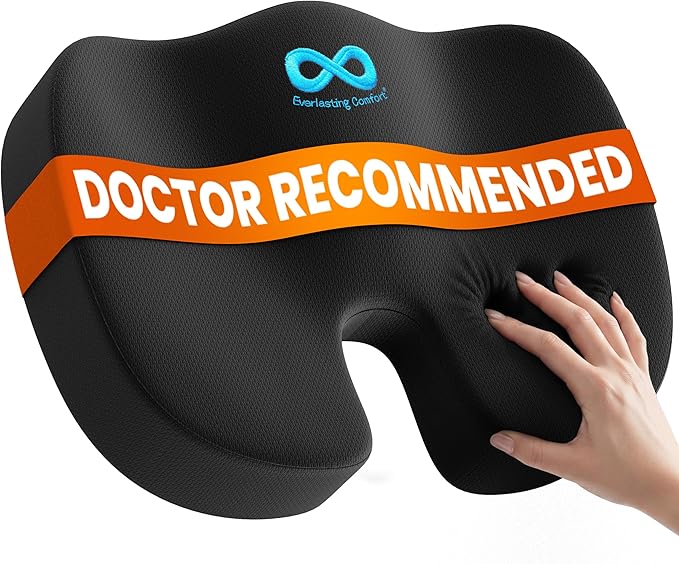
Everlasting Comfort Seat Cushion
$28–35
A U-shaped cutout suspends your tailbone instead of pressing on it. Widely reviewed and doctor-recommended as a baseline — the safe default when you're not sure how severe things are, and it travels well between vehicles.
Other options worth knowing about
If your car sits in the sun and heat retention bothers you, the ComfiLife Gel Enhanced Seat Cushion ($30–40) uses the same cutout mechanism with a cooling gel layer. On a flat bench seat, the ProHeal Gel-Infused Wedge Cushion ($35–65) combines a cutout with a wedge shape that tilts the pelvis the way a cutout alone can't in a bench seat. For serious daily mileage in a bucket seat, the Purple Ultimate Seat Cushion ($149) uses a hyper-elastic polymer grid that resists flattening far longer than foam.
Getting the Fit Right
- Sit down and check, by feel, that your tailbone lines up with the center of the cut-out — off-center placement is the most common setup mistake.
- Push the cushion fully to the back of the seat so it doesn't shift forward as you drive.
- Sit as upright as is comfortable — slouching can still push the tailbone toward the edge of the cut-out even with a good cushion.
Frequently Asked Questions
What is the best car seat cushion for tailbone pain?
A U-shaped cushion with a deep, full cut-out at the rear is generally the most effective for tailbone pain, since it's the only design that fully eliminates contact with the coccyx rather than just softening it.
Do coccyx cushions actually work in a car?
Yes, for pain caused by direct pressure and vibration, which covers most driving-related tailbone pain. A well-fitted cut-out cushion removes the specific mechanism causing the discomfort rather than just adding padding on top of it.
Ring cushion or U-shaped cushion for tailbone pain in a car?
U-shaped cushions tend to work better for regular driving because the open back and supported sides create a more stable seated position; ring cushions can feel less stable in a moving vehicle and may put pressure on the inner thighs.
How long does it take a coccyx cushion to help with driving pain?
Many people notice a difference on the first drive, since the mechanism is mechanical — removing direct pressure — rather than something that needs to build up over time. If there's no improvement after a couple of weeks of consistent use, the pain may need medical evaluation rather than a different cushion.
Not Sure Which Type Fits Your Pain?
Tailbone pain, sciatica, and general lower back pain call for different cushion shapes, and the wrong one won't help much. If you have a diagnosed herniated or bulging disc, that's a different setup too. Take the 60-second quiz to get matched to the cushion built for your specific pain.
Get a specific pick, not a category
The quiz takes your pain type, seat, and budget and gives you one clear recommendation.
This article is for general informational purposes and isn't a substitute for professional medical advice. If tailbone pain follows an injury, is severe, or doesn't improve with a properly fitted cushion, please consult a doctor.