If your lower back starts aching within twenty minutes of getting behind the wheel, the problem usually isn't your spine — it's your seat. Most car seats are built for the average body and a short commute, not a specific driver on a two-hour haul. A car seat cushion for lower back pain works by correcting the two things stock seats get wrong: pelvic tilt and lumbar contact. Get those right and the ache that shows up on longer drives often disappears without touching your seat, your car, or your spine.
Quick answer
For most lower back pain from driving, a firm lumbar support pillow at the small of your back — paired with a wedge if you also slouch — outperforms a single flat seat pad. Firm memory foam holds its shape over a commute better than soft padding.
Why Lower Back Pain Shows Up on Drives
Car seats — even in luxury vehicles — are shaped to accommodate the widest range of body types, which means they're rarely shaped correctly for any one person. Two mechanical issues drive most of the discomfort:
- Flat or sagging seat base. Over time, foam compresses and the seat pan tilts your pelvis backward (posterior tilt), which flattens the natural curve in your lower spine and loads the lumbar discs unevenly.
- Missing or misplaced lumbar contact. Built-in lumbar support is often too low, too high, or too weak to matter once you've been sitting for thirty minutes and your posture has drifted.
Add in vibration, limited leg movement, and the seatbelt pulling your shoulder forward, and even a healthy back can start protesting on a regular commute — let alone a road trip.
What to Look For in a Cushion
Not every "back pain" cushion targets the same mechanism. For lower back pain specifically, prioritize:
- Firm, high-density foam. Soft foam feels nice for the first five minutes and then compresses flat, losing any support it offered. Look for cushions that specify high-density or orthopedic-grade foam.
- A dedicated lumbar piece. The lumbar curve sits higher on your back than most seat cushions can reach on their own — a strapped lumbar pillow addresses it directly.
- Adjustable positioning. The right height varies by torso length and seat design; a strap-adjustable pillow beats a fixed-shape cushion.
- A slight forward wedge (if you slouch). A wedge tilts the pelvis into a more neutral position instead of letting you slide into a slouch — useful alongside a lumbar pillow, not instead of one.
- Breathable cover. Memory foam traps heat; a mesh or breathable cover matters more than it sounds like it would on longer drives.
Cushion Types That Actually Help
Two categories cover most of what's on the market for this specific pain type:
Lumbar Support Pillows
A curved pillow that straps to the seatback and fills the gap at the small of your back. This is the standard recommendation for general lower back ache — the fix is postural, not padding, so a piece that holds your spine's natural curve does more than a soft seat pad ever will.
Wedge Cushions
Useful as a secondary piece for drivers who slouch or sit with their tailbone tucked under — the forward tilt counteracts the posterior pelvic tilt that flattens the lumbar curve. Best paired with a lumbar pillow rather than used alone for this pain type.
Here's the pick most drivers reach for first:
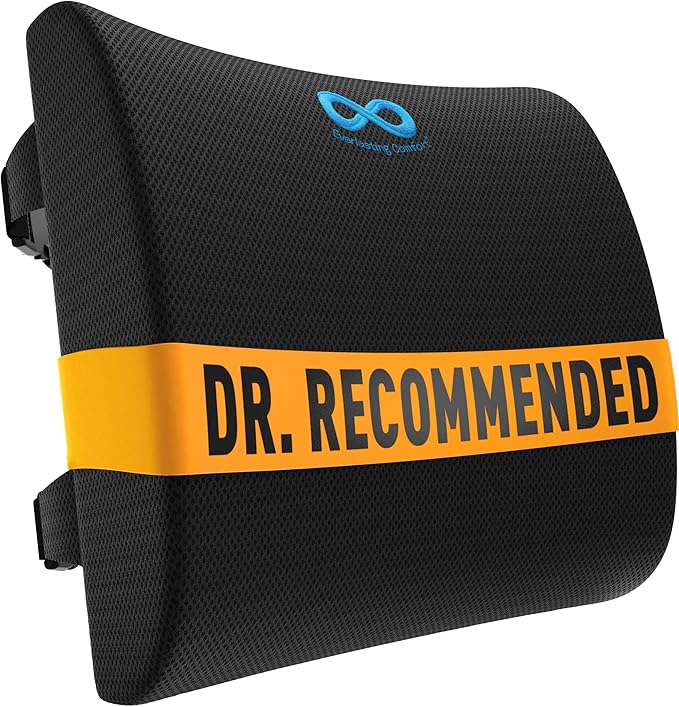
Everlasting Comfort Lumbar Support
$22–28
An adjustable-strap pillow that holds your lumbar spine's natural curve instead of just adding softness. It won't do anything for tailbone pain — that's not what it's for — but for general driving-related lower back ache, it addresses the actual cause rather than padding over it.
If you've tried a soft lumbar pillow and it wasn't firm enough
The RelaxSupport RS1 Orthopedic Lumbar ($28–32) is a firmer, more orthopedic build aimed at chronic rather than occasional ache. And if the pain shows up alongside hip strain or a seat that dips from knee to hip, the ComfiLife Premium Wedge Memory Foam ($45–50) pairs a forward tilt with visibility improvement for bucket seats.
Setting It Up Correctly
The cushion only works if it's positioned right:
- Position a lumbar pillow at the belt-line of your pants, not higher up your back — most people place it too high.
- If adding a wedge, push it fully back against the seatback — a gap here defeats the pelvic tilt.
- Sit so your hips are slightly higher than your knees; this is the neutral position a wedge is designed to create.
- Readjust your mirrors and seat position after adding a cushion — the extra height changes your eye line.
Frequently Asked Questions
What is the best car seat cushion for lower back pain?
For most drivers, a firm wedge cushion combined with a separate lumbar support pillow addresses lower back pain more effectively than a single flat pad, because it corrects pelvic tilt and lumbar contact separately rather than trying to solve both with one shape.
Can a car seat cushion really fix lower back pain?
A cushion can reduce or eliminate pain that's caused by poor seat ergonomics — which is the majority of driving-related lower back discomfort. It won't resolve pain from an underlying medical condition; if pain is severe, persistent, or radiates down a leg, see a doctor or physical therapist rather than relying on a cushion alone.
How thick should a car seat cushion be for back pain?
Most effective lower back cushions are 2–3 inches thick. Thinner cushions often compress flat within weeks; much thicker cushions can push your head too close to the roof or throw off your view over the dashboard.
Memory foam or gel cushion for lower back pain?
Memory foam generally holds a supportive shape longer under sustained weight, which matters more for lower back pain than the initial softness gel provides. Gel-topped memory foam hybrids are a reasonable compromise if heat and pressure points are also a concern.
Not Sure Which Type Fits Your Pain?
Lower back pain, sciatica, and tailbone pain call for different cushion shapes — using the wrong one can leave you no better off. Sciatica and tailbone pain need a cutout, not a lumbar pillow. If the ache is up between your shoulder blades or in your neck rather than your lower back, that's a different mechanism — see upper back and neck pain instead. If you have a diagnosed herniated or bulging disc, that needs a firmer combo setup. Take the 60-second quiz to get matched to the cushion type built for your specific pain pattern.
Get a specific pick, not a category
The quiz takes your pain type, seat, and budget and gives you one clear recommendation.
This article is for general informational purposes and isn't a substitute for professional medical advice. If you're experiencing severe, worsening, or persistent back pain, please consult a doctor or physical therapist.