Sitting is one of the worst positions for sciatica, and driving combines sitting with vibration, limited movement, and a seat pan that presses directly on the exact spot where the sciatic nerve is most exposed — the back of your thigh, just below the sit bones. A car seat cushion for sciatica isn't about softness; it's about redistributing weight away from that pressure point and keeping your pelvis in a position that doesn't compress the nerve further.
Quick answer
Cushions with a cut-out or U-shaped channel down the center are the most effective for sciatica — they remove direct pressure from the sit-bone area and the nerve pathway beneath it. Firm memory foam works better than soft padding, which lets the pelvis sink and re-creates the pressure the cushion is meant to relieve.
Why Driving Aggravates Sciatica
The sciatic nerve runs from the lower spine, under the piriformis muscle, and down the back of each leg. Two things about driving make it a uniquely bad environment for this nerve:
- Direct compression. A flat, firm car seat puts sustained pressure right where the nerve passes beneath the piriformis — the same spot people are told to avoid loading when sciatica flares.
- Static hip flexion. Sitting keeps the hip flexed for extended periods, which can tighten the piriformis muscle and, in some people, increase pressure on the nerve running beneath or through it.
Vibration and an inability to shift position easily — especially in stop-and-go traffic or on long highway stretches — compound both issues.
What to Look For in a Cushion
- A cut-out or channel design. This is the single most important feature for sciatica specifically — it's the difference between a general comfort cushion and one built for nerve pressure relief.
- Firm support around the cut-out. The material surrounding the channel needs to hold its shape under weight, or the pelvis sinks and negates the cut-out entirely.
- Enough surface area. Sciatica cushions that are too small tend to shift under you; look for one that fully covers the seat pan.
- Moderate thickness. Around 2–3 inches is typical — thick enough to offload pressure, not so thick it changes your driving position.
Cushion Types That Actually Help
U-Shaped Cut-Out Cushions
The standard recommendation for sciatica. The open channel down the center removes direct contact with the area where nerve compression is most likely, while the surrounding foam still supports the thighs and sit bones.
Cushion + Lumbar Combo Sets
On longer drives, a cut-out seat cushion alone often isn't enough — pairing it with a lumbar support piece keeps the spine neutral so it isn't compensating for the pressure relief happening below. Worth considering if sciatica gets noticeably worse the longer a drive goes.
Firm Memory Foam Wedge with Cut-Out
Combines a slight forward tilt (helpful if sciatica is aggravated by a slouched, posterior-tilted pelvis) with a pressure-relief channel. A reasonable pick if lower back pain and sciatica happen together.
Here's the pick most drivers reach for first:
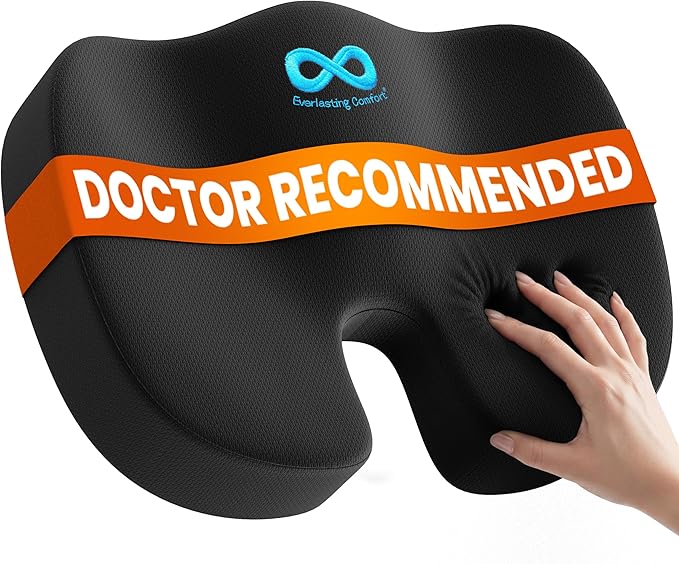
Everlasting Comfort Seat Cushion
$28–35
A U-shaped cutout suspends your tailbone instead of pressing on it, and takes pressure off the hips where a pinched sciatic nerve gets aggravated. Widely reviewed and doctor-recommended as a baseline — the safe default when you're not sure how severe things are.
If pain gets worse the longer the drive goes
The Cshidworld Gel Cushion + Lumbar Set ($32–38) pairs a seat cushion with a lumbar piece so your spine isn't compensating for the pressure relief happening below — buying just the seat cushion and skipping the lumbar half is the most common mistake with sciatica specifically. For a diagnosed nerve or disc issue, the heavier, MD-designed Elmara Seat Cushion + Lumbar Set ($60–70) is the step up.
Other Adjustments That Help Alongside a Cushion
- Recline the seatback slightly — a 100–110° angle reduces hip flexion compared to sitting bolt upright.
- Take movement breaks on longer drives — every 60–90 minutes, get out and walk for a few minutes to release the piriformis.
- Check your wallet or phone position — sitting on a wallet in a back pocket is a surprisingly common, easily fixed contributor to sciatic pressure.
Frequently Asked Questions
What is the best car seat cushion for sciatica?
A firm memory foam cushion with a U-shaped or center cut-out is generally best for sciatica, since it removes direct pressure from the area where the sciatic nerve is most exposed while still supporting the rest of the seated area.
Do cut-out cushions really help sciatica while driving?
They can meaningfully reduce discomfort caused by direct pressure on the nerve pathway, which is a common driving-related trigger. They won't address sciatica caused by a spinal issue like a herniated disc — in that case, the cushion helps manage symptoms during drives, but the underlying cause needs separate medical attention.
Should a sciatica cushion be soft or firm?
Firm. Soft cushions allow the pelvis to sink toward the seat base over time, which can re-create the exact pressure a cut-out design is meant to avoid. Firm, high-density foam holds its shape through longer drives.
Can a car seat cushion make sciatica worse?
Yes, if it's the wrong shape or too soft. A flat cushion with no pressure relief, or one that's overly plush and compresses under weight, can increase contact in the exact area that needs to be offloaded. Shape matters more than price for this condition.
Not Sure Which Type Fits Your Pain?
Sciatica, tailbone pain, and general lower back pain each respond best to a different cushion shape. See how it compares to tailbone pain, general lower back pain, and herniated disc pain, or take the 60-second quiz to get matched to the right one instead of guessing.
Get a specific pick, not a category
The quiz takes your pain type, seat, and budget and gives you one clear recommendation.
This article is for general informational purposes and isn't a substitute for professional medical advice. Sciatica can stem from several different underlying causes — if pain is severe, persistent, or accompanied by numbness or weakness, please consult a doctor.