Sitting puts more pressure on lumbar discs than standing or lying down does — a well-established finding in spinal load research — which is exactly why driving is often one of the hardest activities for someone managing a herniated or bulging disc. A car seat cushion for a herniated disc can't fix the disc itself, but the right one measurably reduces the sustained pressure and poor posture that make symptoms worse on longer drives.
Quick answer
A firm lumbar support cushion that restores the natural inward curve of the lower spine, combined with a seat that's reclined slightly (100–110°) rather than upright, does the most to reduce disc pressure while driving. Avoid soft, unsupportive cushions — they let the spine slump into the flexed position that loads a herniated disc the most.
Why Driving Is Hard on a Herniated Disc
Two mechanics make sitting in a car worse than most other seated positions:
- Increased intradiscal pressure. Sitting — especially leaning slightly forward, as many drivers do toward the wheel — increases pressure on the lumbar discs compared to standing.
- Loss of the lumbar curve. Most car seats let the lower back flatten or round outward (flexion) over time, which shifts pressure toward the front of the disc, the direction most herniations bulge.
Vibration and the inability to change position freely — both constant in a moving car — add sustained load on top of already elevated pressure.
What to Look For in a Cushion
- Strong, adjustable lumbar support. The goal is restoring the natural lumbar curve (lordosis), not just adding softness. A firm, contoured lumbar pillow does this more reliably than a flat seat pad.
- Firm base cushion, not soft. Soft padding compresses and allows the pelvis to tilt backward, flattening the exact curve you're trying to maintain.
- Adjustable position. The right lumbar height varies by person and by which disc level is affected — a strap-adjustable pillow beats a fixed-shape cushion here.
- Breathable material. Longer, more careful drives (common for anyone managing a disc issue) mean more time in the seat, so heat buildup matters more than it would for a short commute.
Cushion Types That Actually Help
Adjustable Lumbar Support Pillows
The most directly relevant option — these strap to the seatback and let you fine-tune both height and firmness, which matters more for a herniated disc than for general back soreness, since the "right" spot varies by which disc level is involved.
Seat Cushion + Lumbar Combo Sets
Disc pain is the case for a combo approach: a seat cushion plus a lumbar piece together, not either alone. The seat cushion reduces pressure on the seat pan while the lumbar piece keeps the spine neutral so the disc isn't loaded unevenly. Buying just one half of that pair is the most common mistake people make shopping for this specifically.
Wedge Seat Cushions
Useful as a secondary piece — a forward tilt helps prevent the posterior pelvic tilt that flattens the lumbar curve. Best paired with a lumbar pillow rather than used alone for disc-related pain.
Here's the pick most drivers reach for first:
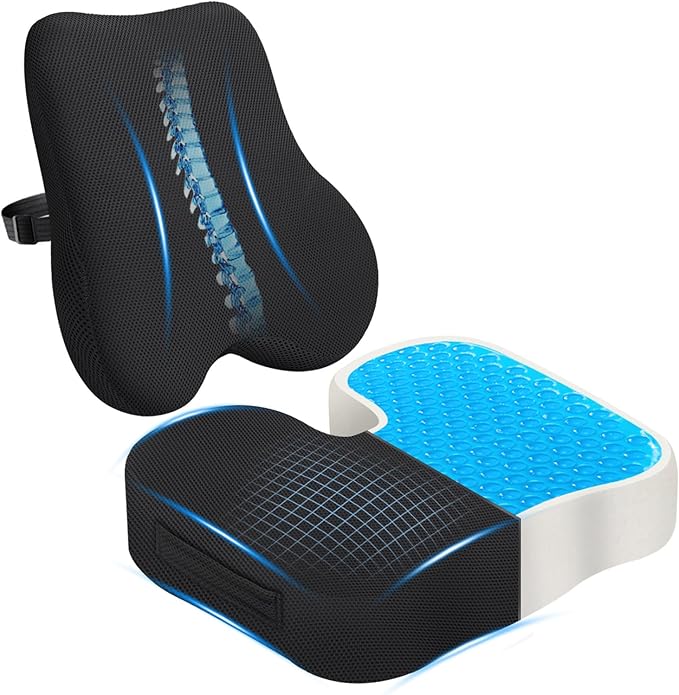
Cshidworld Gel Cushion + Lumbar Set
$32–38
A seat piece and a lumbar piece sold together — the seat cushion handles the seat pan, the lumbar piece keeps the spine in a neutral position so the disc isn't loaded unevenly. Buying just one half is the mistake most people make with disc pain specifically.
For a diagnosed, ongoing condition
The Elmara Seat Cushion + Lumbar Set ($60–70) is a heavier, MD-designed combo pitched at drivers managing a confirmed diagnosis rather than casual soreness. If you only need the lumbar piece — for example, your seat base is already reasonably supportive — the Everlasting Comfort Lumbar Support ($22–28) is the standalone option.
Beyond the Cushion: Reducing Disc Load on Drives
- Recline slightly. A 100–110° seatback angle reduces disc pressure compared to sitting bolt upright, based on established seated-posture research.
- Move the seat closer, not the back forward. Reaching or leaning toward the wheel increases forward flexion — adjust the seat position instead of your posture.
- Break up long drives. Standing and walking for a few minutes every hour relieves sustained disc pressure in a way no cushion can replicate while seated.
- Get in and out carefully. Twisting while getting into a low seat is a common trigger for flare-ups — pivot on the seat rather than twisting the spine.
Frequently Asked Questions
What is the best car seat cushion for a herniated disc?
An adjustable, firm lumbar support pillow that restores the natural inward curve of the lower spine is generally the most useful, since it directly addresses the postural flexion that increases pressure on a herniated disc.
Can a cushion make driving with a herniated disc safe?
A cushion can reduce discomfort and pressure from poor seated posture, but it doesn't change the underlying condition. Anyone managing an active herniated disc should follow their doctor's or physical therapist's specific guidance on driving duration and positioning.
Is it better to sit upright or reclined with a herniated disc?
A slight recline (roughly 100–110°) generally reduces disc pressure compared to sitting fully upright, though the ideal angle can vary by individual — a physical therapist can help pinpoint what works best for a specific disc level and body.
Should I avoid soft cushions with a herniated disc?
Generally, yes. Soft, unsupportive cushions let the pelvis and lower spine sink into a flexed position over time, which tends to increase pressure on the front of the disc — the opposite of what most herniated disc management aims for.
Not Sure Which Type Fits Your Pain?
A herniated disc, general lower back pain, sciatica, and tailbone pain often call for different cushion setups. Take the 60-second quiz to find the one built for your specific situation.
Get a specific pick, not a category
The quiz takes your pain type, seat, and budget and gives you one clear recommendation.
This article is for general informational purposes and isn't a substitute for professional medical advice. A herniated disc is a diagnosed medical condition — please follow your doctor's or physical therapist's guidance on driving, sitting duration, and posture.